

14 April 2026: The 9th edition of India Pharma 2026, organised by the Department of Pharmaceuticals, Ministry of Chemicals & Fertilizers, Government of India, in association with FICCI and IPA, New Delhi, successfully concluded today, after two days of extensive deliberations aimed at strengthening India’s pharmaceutical and biopharma ecosystem.
On the second day of the event, two plenary sessions and a valedictory session were held, focusing on strengthening the pharmaceutical financing ecosystem and charting forward-looking pathways for innovation-led growth. The discussions brought together key stakeholders from industry, finance, academia and policy, highlighting the importance of strategic investments, infrastructure and speed in driving the next phase of sectoral transformation. The sessions emphasised a shift from scale to breakthrough innovation, with a strong focus on advanced therapeutics and unlocking new growth frontiers through investment and innovation synergy.
The event witnessed participation from over 800 delegates across both days, with more than 60 speakers engaging in 10 sessions including 6 plenary sessions, supported by over 20 partner organisations.
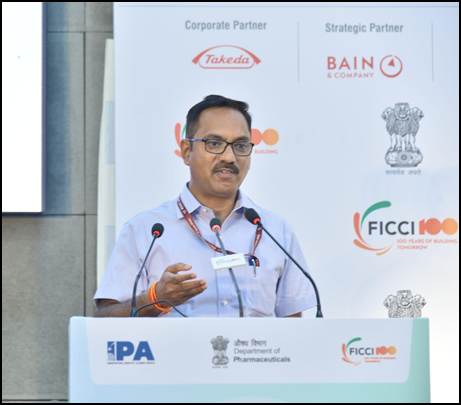
Delivering the valedictory address, Shri. Satyaprakash T L, Joint Secretary, Department of Pharmaceuticals, Ministry of Chemicals and Fertilizers noted that discussions across sessions converged around three critical enablers for the next phase of growth: funding, infrastructure and speed. While stakeholders expressed varied views on prioritisation, there was a shared understanding that coordinated action across government, industry and academia is essential. Emphasising the urgency of collaboration, he stated that India must proactively position itself in the evolving global pharmaceutical landscape to remain competitive.
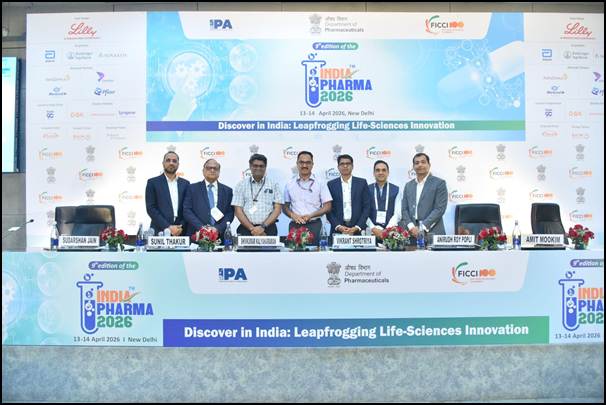
Earlier in the day two plenary sessions were conducted. The session on “Developing a Vibrant Pharma Financing Ecosystem” underscored the critical role of timely and strategic capital in driving pharmaceutical innovation. Speakers highlighted that sustained growth in the sector depends not only on scientific advancements but also on the availability of diverse and accessible financing mechanisms. Dr. Shivkumar Kalyanaraman, Chief Executive Officer, Anusandhan National Research Foundation (ANRF), outlined the evolving research funding architecture, noting that it combines grant-based support for academia and not-for-profit institutions with capital-based instruments for the private sector.
The discussion explored funding avenues such as venture capital, private equity, blended finance, and public-private partnerships, which are opening new growth pathways for pharmaceutical enterprises. Emphasis was placed on fostering stronger collaboration between industry, investors, regulators, and research institutions to build a resilient and responsive funding ecosystem. Panelists also addressed key financial challenges faced by the sector, including long R&D cycles, high-risk investments, and regulatory and market uncertainties. The need for innovative financing models that support the entire value chain-from early-stage research to commercialization, was highlighted as essential for accelerating innovation and enhancing global competitiveness.
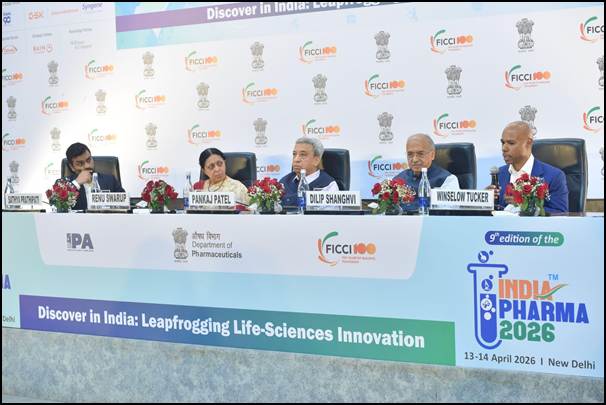
The sixth plenary session, moderated by Shri Sudarshan Jain, Secretary General, Indian Pharmaceutical Alliance, focused on charting India’s next phase of pharmaceutical growth by moving beyond incremental progress toward bold, innovation-driven transformation. Reflecting on the broader evolution of India’s biotechnology and pharmaceutical ecosystem, Dr Renu Swarup, Former Secretary to Govt of India, Department of Biotechnology, Ministry of Science & Technology while addressing session on ‘Reflections and Big Moves to Leapfrog Innovation’, emphasised that the country has made significant strides in building a comprehensive innovation value chain over the past decade, spanning discovery, development and deployment. India has successfully strengthened linkages between academia and industry, which were earlier fragmented, and has created a more cohesive ecosystem for product development. Drawing on the experience of the COVID-19 pandemic, she described it as a testbed that validated India’s capabilities in areas such as financing, partnerships, infrastructure and rapid innovation.
Shri Dilip Shanghvi, Executive Chairman, Sun Pharmaceutical Industries Limited, underlined that pharmaceutical innovation is inherently high-risk and requires mechanisms to share risk across stakeholders, while emphasizing sustained investment in R&D, the importance of reimbursement pathways, and building a strong pipeline of innovative Indian products. Noting that while India has established itself as a global leader in generics and vaccines, the next phase lies in advancing innovative medicines and cutting-edge science to shape the future of global healthcare. Shri Pankaj Patel, Chairman, Zydus Lifesciences, emphasized the need for stronger financial support for research, expanding market access for new drugs.
Shri Winselow Tucker, Co-Chair of the FICCI Pharma Committee and President and General Manager, Eli Lilly India, highlighted that successful transformation in the pharmaceutical sector requires a clear strategic intent supported by a phased roadmap with well-defined milestones.
Industry leaders emphasised fostering deeper collaboration between government, academia, and industry, while highlighting the transformative role of AI and the importance of accountability across stakeholders.
The sessions collectively highlighted that while India has built strong foundations in pharmaceuticals, the next phase of growth will require bold investments, deeper ecosystem collaboration, and a shift towards innovation-led development to position the country as a global leader in advanced therapeutics.
Source: PIB



0 Comments